Harmonium Sargam Notes Chart
Master Sa Re Ga Ma Pa Dha Ni, komal swar, teevra Ma, and shuddha notes — a beginner-friendly reference.
Free — No Install Required
Master Sa Re Ga Ma Pa Dha Ni, komal swar, teevra Ma, and shuddha notes — a beginner-friendly reference.
Sargam is the Indian solfège system — the foundation of every raga and song you will ever play. Understanding these twelve notes and their placement on the harmonium keyboard is the single most important step for beginners.
Indian classical music uses 12 notes: 7 shuddha (pure) notes and 5 variants (4 komal + 1 teevra). Memorize the order and practice singing while playing.
Not every note in Indian classical music is fixed. Four notes can be flattened (komal) and one can be sharpened (teevra). This gives us the 12-tone chromatic scale used in all ragas.
| Note | Shuddha (Natural) | Komal (Flat) | Teevra (Sharp) | Western Equivalent |
|---|---|---|---|---|
| Sa | Sa (fixed) | — | — | C |
| Re | Re | Komal Re | — | D / D♭ |
| Ga | Ga | Komal Ga | — | E / E♭ |
| Ma | Shuddha Ma | — | Teevra Ma | F / F♯ |
| Pa | Pa (fixed) | — | — | G |
| Dha | Dha | Komal Dha | — | A / A♭ |
| Ni | Ni | Komal Ni | — | B / B♭ |
When arranged in ascending order, the full sargam chromatic scale is:
Sa komal Re Re komal Ga Ga Ma Teevra Ma Pa komal Dha Dha komal Ni Ni Sa'
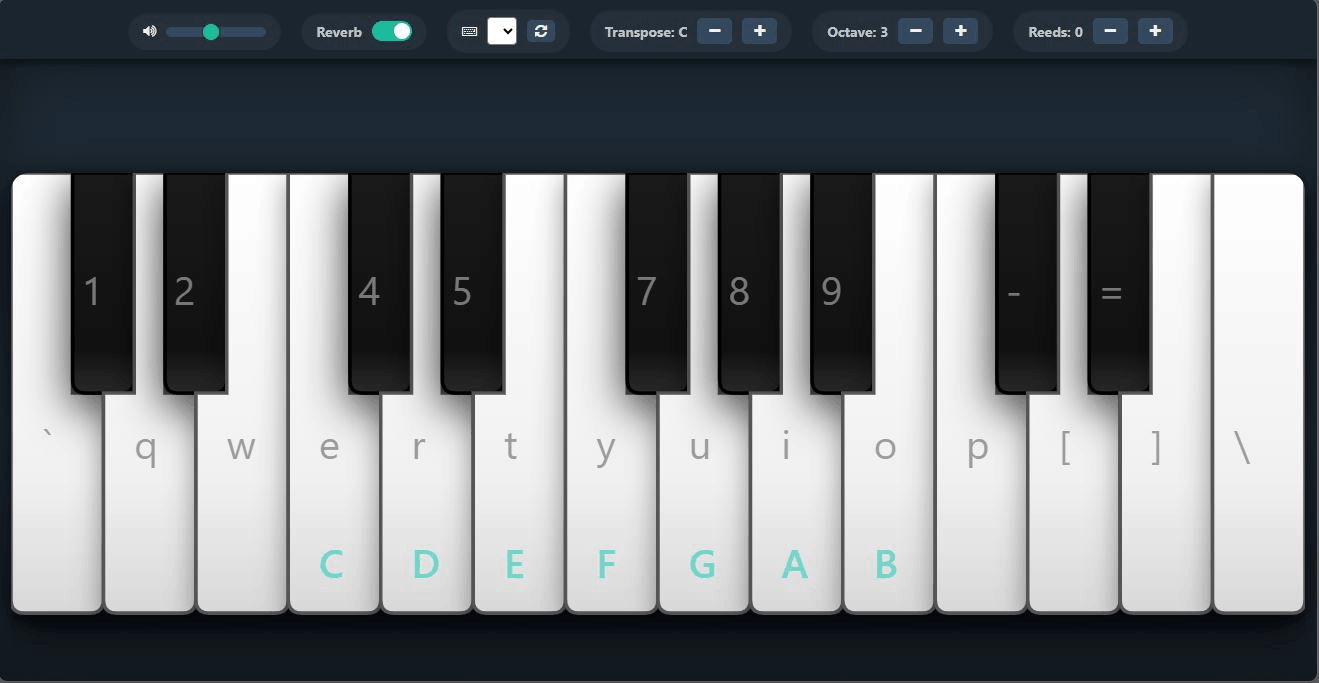
On Web Harmonium, the default layout maps white keys to shuddha notes and black keys to komal / teevra variants. Combine this with our finger placement guide for proper hand position. Here is how to play a basic Bilawal scale (all shuddha notes):
| Sargam | Key to Press | Type |
|---|---|---|
| Sa | e | White key |
| Re | r | White key |
| Ga | t | White key |
| Ma | y | White key |
| Pa | u | White key |
| Dha | i | White key |
| Ni | o | White key |
| Sa' (upper octave) | p | White key |
Tip: Practice ascending (aaroh) and descending (avaroh) slowly. Sing the note names aloud as you play — this builds the essential connection between ear, voice, and fingers.
Unlike Western sheet music, Indian classical music is taught orally through sargam. Every raga is a specific arrangement of these 12 notes. When you internalize sargam:
Sargam notes are the seven primary musical notes in Indian classical music: Sa, Re, Ga, Ma, Pa, Dha, and Ni. They are the foundation for all ragas and melodies played on harmonium.
There are 12 notes total when including komal (flat) and teevra (sharp) variants: Sa, komal Re, Re, komal Ga, Ga, Ma, teevra Ma, Pa, komal Dha, Dha, komal Ni, Ni.
Komal lowers a note by one semitone (applied to Re, Ga, Dha, Ni). Teevra raises Ma by one semitone. Shuddha means the natural, unaltered form of the note.
Yes. Once you have practiced sargam, continue to our finger exercises and raga practice guide. Press Ctrl+P (or Cmd+P on Mac) to print this chart. — the dark background will invert and the tables and swar cards will format cleanly on paper.