A physical harmonium is a delicate masterpiece of wood, leather, felt, and brass. Because it relies on moving airflow and natural materials, it is highly sensitive to humidity, temperature shifts, and dust. Routine maintenance not only prolongs the life of the instrument but ensures its tuning remains stable. This guide covers physical maintenance checklists, fixing mechanical sticky keys, and tuning calibration.
Never store your harmonium in extreme heat, cold, or direct sunlight. Sudden temperature fluctuations expand or contract the brass reeds, causing them to drift permanently out of tune. Always store the instrument inside a padded bag when not in use.
Physical Harmonium Care Checklist
Implementing these basic habits will keep your harmonium sounding crisp and airtight for decades:
1. Bellows Leather Protection
The folds of the bellows are made of cardboard lined with thin leather or cloth. Dry heat causes this leather to crack, causing massive air leaks.
Bellows Leather Maintenance
- Conditioning: Every 6 months, apply a very small layer of professional leather conditioner or simple baby oil to the exterior leather folds to keep them flexible.
- Check the Locks: Always lock the bellows latch when transporting the instrument to prevent them from stretching and tearing.
2. Dealing with Sticky Keys
Sticky keys (keys that remain pressed down or are sluggish to bounce back up) are common in humid environments because the wooden key channels swell.
- The Quick Fix: Gently wiggle the sticking key sideways. Often, this releases friction against the guide pins.
- Deep Cleaning: Remove the top screen cover. Use a dry, soft brush to remove dust and debris that may have collected between the keys. Avoid adding any oil or water, which swells wood.
Reed Care & Rust Prevention
The sound of a harmonium is created by small brass tongues (reeds) vibrating through tight slots. If moisture gets onto these reeds, they oxidize (rust) and drift flat.
| Problem | Cause | Correction Method |
|---|---|---|
| Buzzing Reed Sound | Dust particle trapped in the reed slot. | Open the back board, gently flick the reed tongue with a thin needle to dislodge dust. |
| Note sounds flat (low pitch) | Corrosion or moisture buildup on the tip of the reed. | File a microscopic amount of metal off the *tip* of the reed tongue. |
| Note sounds sharp (high pitch) | Rust or wear near the *base* of the reed tongue. | Scrape a microscopic layer of metal from the *base* of the reed. |
Digital Tuning & Calibration
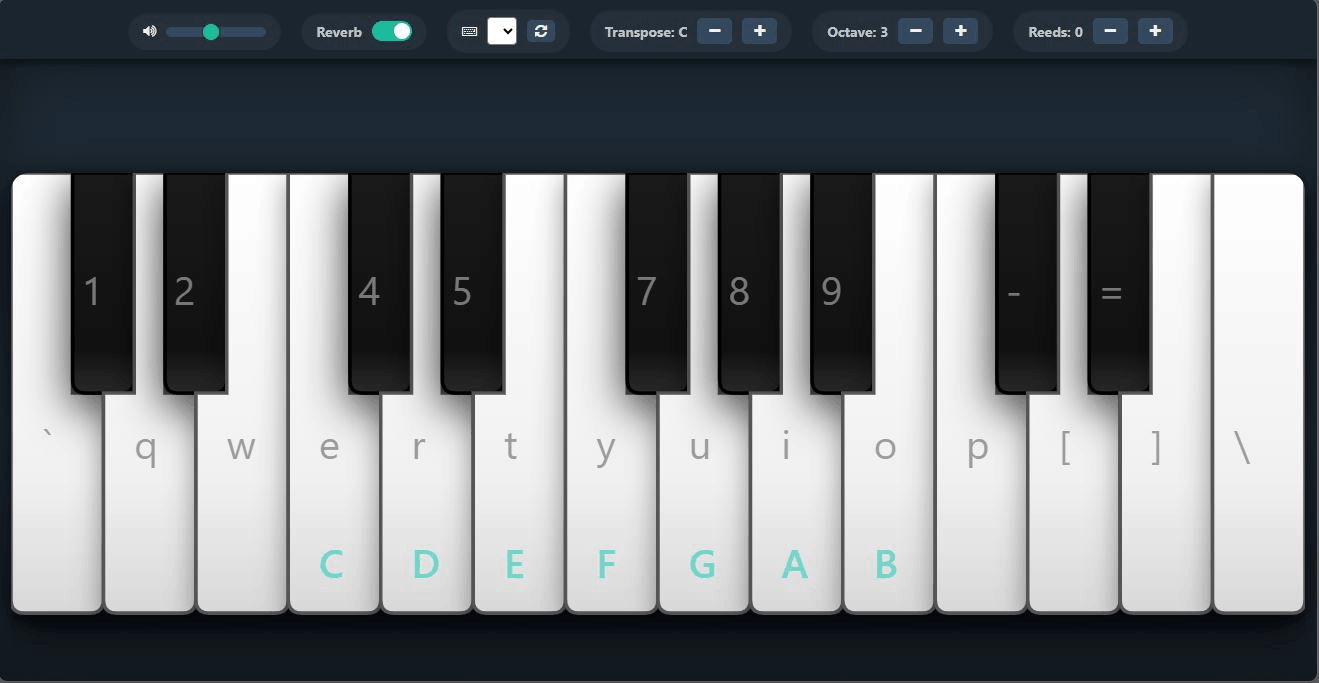
Tuning a physical harmonium is a highly specialized skill requiring a file and a trained ear. Before paying for professional tuning, you can verify your pitch calibration against our virtual harmonium.
-
Establish a Standard Reference
Launch the Web Harmonium app. Set the digital tuning standard to A440 Hz (the universal default). Play C4 (Middle C) on the virtual app.
-
Analyze the Beats
Play the corresponding C key on your physical harmonium simultaneously. Listen closely to the sound. If you hear a rapid "wah-wah-wah" pulsing sound (beats), the instruments are out of phase.
-
Calculate the Deviation
Count the number of pulses in 5 seconds. If you hear 5 beats, your physical reed is roughly 1 Hertz out of tune. Use this stable virtual reference to identify which specific physical notes are flat or sharp.
Frequently Asked Questions
Why does my harmonium smell like camphor?
Camphor tablets or mothballs are traditionally placed inside harmoniums to keep wood-eating insects (like termites) from destroying the delicate wooden soundboard. This is a very good maintenance practice!
Can physical harmoniums be tuned to A432 Hz?
Yes, but it requires scraping every single brass reed tongue manually. If you want to explore the calming A432 Hz frequency easily, simply use the Hz Tuning Slider on the Web Harmonium app instead.
How do I protect my harmonium from winter dryness?
Dry winter air shrinks wood and cracks bellows. Keep your harmonium in its case and place a small guitar humidifier or damp sponge inside a plastic bag (with tiny holes) in the case storage pocket.