The bellows (Dhonkni) are the very lungs of the harmonium. While your right hand is responsible for selecting notes and playing melodies, your left hand on the bellows regulates the **volume, expression, and sustain**. Without proper bellows control, even the most accurate melodies will sound mechanical and lifeless. This guide covers physical wrist techniques, handling air leaks, and how digital harmoniums model air behavior.
The golden rule of bellows pumping is smooth continuity. Never pump with jerky or sudden motions. Your wrist should act as a flexible spring, creating a steady stream of pressurized air to maintain a constant, warm musical tone.
Physical Bellows Mechanics
On a physical harmonium, the bellows are placed at the back or front of the instrument. They are held open by a spring-lock mechanism and operated with the non-dominant hand (usually the left hand).
1. The Wrist-Action Technique
Many beginners mistakenly pump the bellows by moving their entire arm from the elbow or shoulder. This leads to early fatigue and choppy airflow. Instead, anchor your forearm lightly on the frame of the harmonium and let your **wrist do 90% of the movement**.
Bellows Pumping Cycle
A standard smooth cycle follows this physical motion:
Pro-Tip: The transition between pulling and pushing is where notes usually break. To prevent this, change direction *while* at least one key is depressed to maintain internal pressure.
2. Managing Air Pressure & Leakages
Every physical harmonium has small, natural air escapes. However, severe air leaks require more frequent pumping and degrade volume control:
- The Leak Check: Hold down no keys and pump the bellows. If they close completely within 2–3 seconds, you have a severe leak in your inner bellows leather or key pads.
- Releasing Excess Air: Most professional harmoniums feature a dedicated Release Valve or a key stop that releases pent-up air safely without sounding a note.
Virtual Sustain & Key Modeling
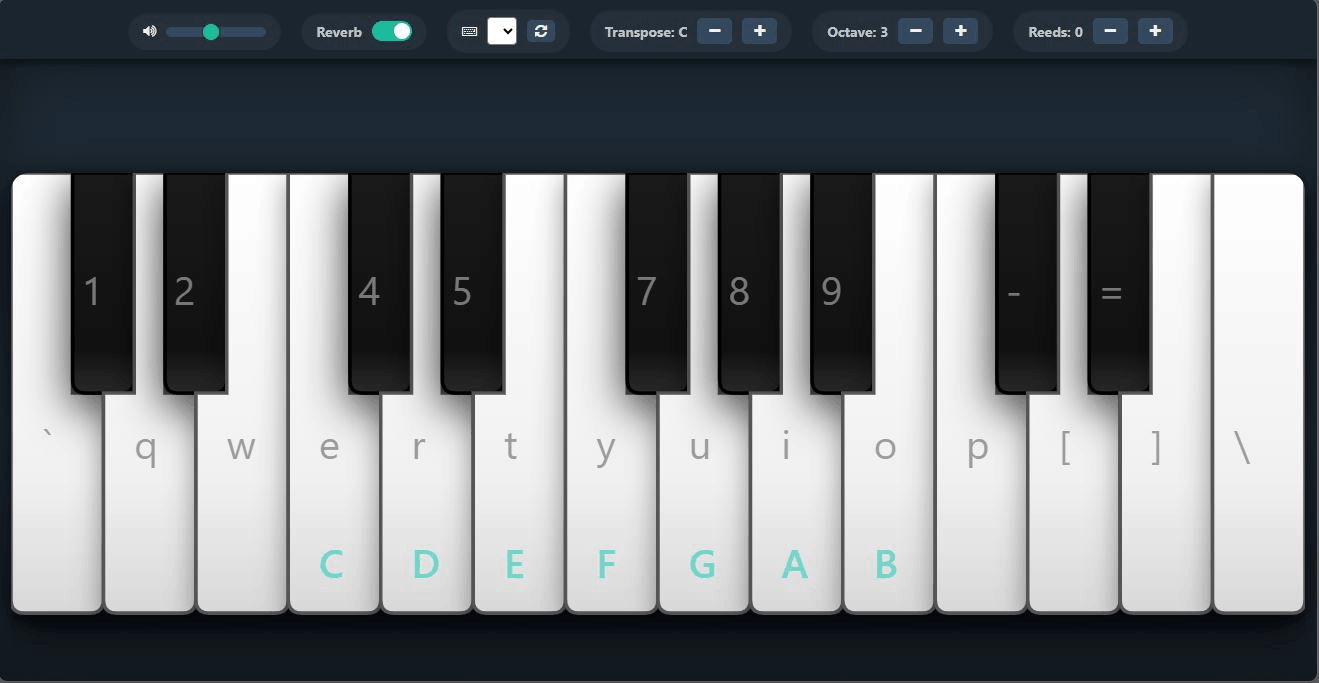
How do we translate this complex physical airflow into a digital, virtual browser application? When you use **Web Harmonium**, the audio engine uses advanced modeling to replicate physical air pressure.
How Web Harmonium Simulates Airflow
| Physical Behavior | Virtual Audio Simulation | How to Control It |
|---|---|---|
| Initial Air Pressurization | Attack Envelope (Fade-In) | Soft, natural rise in volume upon pressing keys. |
| Bellows Air Sustain | Decay & Sustain Gain | Holding down computer keys keeps the virtual reed vibrating. |
| Residual Pressure Release | Release Time (Fade-Out) | A realistic 150ms release tail prevents abrupt, digital clicks. |
| Multi-reed Chorus Pressure | Frequency Detuning & Chorus | Simulates multiple brass reeds vibrating slightly out of phase. |
Step-by-Step Exercise for Bellows Mastery
-
The Long-Tone Drone Drill
Press down a single tonic key (Sa) and pump the bellows. Try to maintain the exact same volume level for 30 seconds. Focus on smoothing out the "turnaround" point when switching from pulling to pushing.
-
The Pulse Control Drill
Play a simple scale. Increase the bellows pressure on the first beat of each bar (adding a gentle accent) and pull back pressure on the weaker beats. This builds excellent dynamic control.
-
Sustain Management (Digital & Physical)
If playing on our virtual keyboard, practice holding down chords while using a spacebar or MIDI sustain pedal to simulate the physical linger of bellows air pressure.
Frequently Asked Questions
How often should I pump physical bellows?
Pumping is not rhythmic; it is dynamic. For quiet passages, pump slowly every 4-6 seconds. For high-volume, multi-reed sections, you may need a short, steady pulse every 2 seconds.
Does Web Harmonium require me to pump keys?
No! The online keyboard automatically manages virtual bellows pressure. Notes sustain realistically for as long as you hold down a PC key or MIDI key, giving you a perfect practice companion.
Why does my harmonium squeak when I pump?
Squeaking is usually caused by unlubricated metal bellows hinges or dry leather folds. Apply a small amount of powdered graphite to the hinges or professional leather conditioner to the folds.