Last updated: September 2026
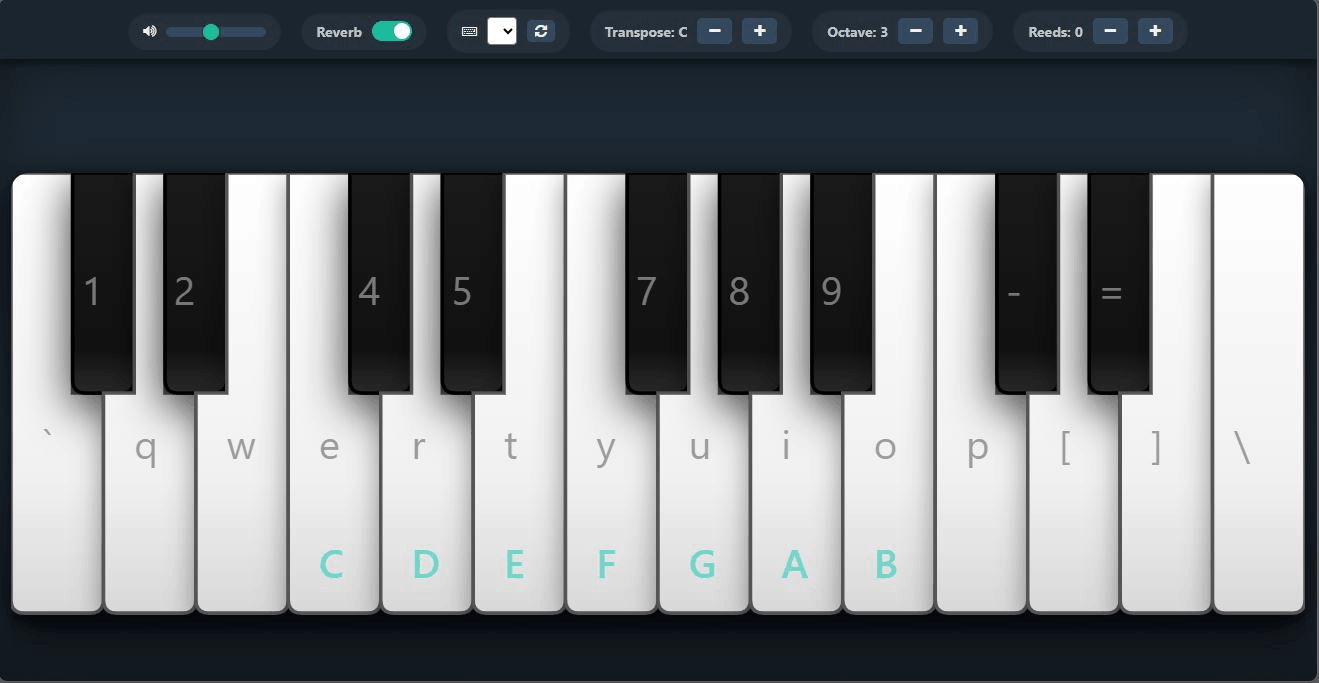
A harmonium is a keyboard instrument that makes sound by pushing air from hand-pumped bellows across free metal reeds — one reed (or more) per key. Unlike a piano, nothing is struck: as long as air flows, the note sustains, which is why the harmonium can breathe along with a singer. In India it is the default accompaniment for bhajan, kirtan, qawwali, ghazal, and Hindustani classical vocal music. You can hear and play a sampled harmonium right now with the free Web Harmonium — no download needed.
The harmonium is a free-reed pump organ: bellows push air, reeds vibrate, keys choose the pitch. Born in 1840s Europe, redesigned in 1875 Calcutta as a hand-pumped floor instrument, it became the heart of Indian devotional and vocal music.
Where does the harmonium come from?
The harmonium began in Europe: Alexandre-François Debain patented the "harmonium" in Paris in 1842 as a foot-pumped parlour organ. Missionaries and traders carried it to India in the 19th century, where it faced a practical problem — Indian musicians sit on the floor. In 1875, Dwarkanath Ghose of the Calcutta firm Dwarkin & Son redesigned it as a smaller, hand-pumped box played while seated, freeing one hand for the keys and one for the bellows. That Indian hand harmonium is the instrument the world knows today.
The harmonium's history has a famous controversy: because its fixed keys cannot slide between pitches the way a voice or sarangi can, All India Radio banned it from broadcasts in 1940. The ban was only relaxed in 1971, and by then the instrument had become inseparable from vocal accompaniment anyway — its steady pitch and singer-friendly sustain simply worked.
How does a harmonium work?
Air does everything. When you pump the bellows, air enters an internal reservoir. Pressing a key opens a valve above one or more brass reeds; the moving air makes the reed vibrate at its tuned pitch, and the note sounds for as long as air keeps flowing. Pump gently and the note whispers; pump firmly and it swells — bellows pressure is the harmonium's expression, like a violinist's bow. Our bellows technique guide covers this in depth.
| Part | What it does |
|---|---|
| Bellows | Hand-pumped air supply; outer bellows feed an inner reservoir for steady pressure |
| Reeds | Tuned brass tongues that vibrate to create the sound — one set per reed bank |
| Keys | Open valves that let air reach a specific reed; typically 2.5 to 3.5 octaves |
| Main stops | Knobs that switch entire reed banks (bass, male, female) on or off |
| Drone stops | Sound a fixed note continuously — an instant tanpura-like drone |
| Coupler | Mechanically links each key to its octave so one press sounds two notes |
| Scale changer | (Premium models) slides the whole keyboard to transpose mechanically |
What music is the harmonium used for?
Bhajan and aarti singing at home and temple, Sikh shabad kirtan (where it is called the vaja), qawwali in the Sufi tradition, ghazal, Marathi natya sangeet, Rabindra sangeet, and as the standard accompaniment for Hindustani classical vocalists. In the last few decades it has also travelled worldwide through yoga and kirtan and mantra chanting communities in the US and Europe.
How is a harmonium different from other keyboards?
Compared with a piano, the harmonium sustains indefinitely and responds to air pressure rather than key velocity — see the full harmonium vs piano comparison. Compared with electronic keyboards, its sound is acoustic and continuous, which suits the long sung lines of Indian music; our harmonium vs keyboard guide weighs both for classical practice.
Hear it yourself: open Web Harmonium and hold any key — the note sustains like a real reed, and the Reed control adds the fuller double-reed character. It is the fastest way to understand what makes this instrument special.
Frequently asked questions
What is a harmonium in simple words?
A harmonium is a small keyboard instrument where hand-pumped bellows push air across metal reeds to make sound. The note keeps sounding as long as you pump, which makes it ideal for accompanying singing.
Who invented the harmonium?
Alexandre-François Debain patented the harmonium in Paris in 1842. The Indian hand-pumped version was developed by Dwarkanath Ghose of Dwarkin & Son in Calcutta in 1875, adapting the instrument for floor-seated playing.
Is the harmonium an Indian instrument?
It originated in Europe, but India adopted and redesigned it so completely — hand bellows, floor playing, drone stops — that the modern harmonium is culturally an Indian instrument, central to bhajan, kirtan, qawwali, and classical vocal accompaniment.
Why was the harmonium banned on All India Radio?
Critics argued its fixed, equal-tempered keys could not produce the sliding meend and microtones of Indian ragas. AIR banned it from broadcasts in 1940 and only relaxed the ban in 1971.
How many keys does a harmonium have?
Most harmoniums span 2.5 to 3.5 octaves — roughly 30 to 42 keys. A standard full-size instrument has 39 to 42 keys, laid out exactly like a piano octave with 7 white and 5 black keys.
Can I try a harmonium without buying one?
Yes — Web Harmonium is a free online harmonium that plays real sampled harmonium sound in your browser on PC or phone, with transpose, octave, reed, and reverb controls. It is a practical way to learn the layout before buying.